 Skip to content


Short answer: yes. Acoustic panels remove echo and reverberation, and a room with too much absorption loses the natural sound energy that makes speech feel easy and spaces feel alive. The target is clarity. Commercial rooms generally need enough absorption to control reverberation, with a little life left in the room.
Key takeaways
- Over-absorbing a room costs more in material, installation labour and embodied carbon, and can make the space worse.
- Social spaces like restaurants, cafes, bars and foyers need some ambient sound to feel welcoming.
- Recording and podcast studios are the exception, since they benefit from maximum absorption.
- The best results come from placing panels where sound travels, with coverage kept proportionate to the room.
- dbsorb Acoustic Solutions designs and manufactures custom acoustic panels with architects and designers, sized to each room, using recycled content and a glue-free mounting clip system.
The Assumption That More Absorption Is Always Better
Specifying acoustic panels often follows simple logic: the room is noisy, so add panels. If the room is still noisy, add more.
The instinct has a real source. Recording studios and podcast booths are treated heavily on purpose, because every reflection is a chance for muddiness and fewer reflections mean a cleaner recording.
Restaurants, cafes, offices, classrooms and foyers are built for people, and people need some acoustic life around them. Studio-grade treatment in a room built for conversation brings effects nobody planned for, and the rest of this article covers them.
What Happens When a Room Becomes Over-Absorbed?
Reverberation time, often written as RT60, measures how long sound takes to fade after the source stops. An over-treated room has a very short one. In practice, that tends to show up as:
Voices that sound flat and tiring. With no reflected sound to lean on, speakers work harder to project.
Strained communication across a room. Speech struggles to carry, so people raise their voices or move closer.
A loss of atmosphere. The room feels muted and a little lifeless.
Unbalanced sound. Absorption treats each frequency differently, so what remains can sound boomy or dull.
The cost side is just as real. A fully covered room uses more material, takes more installation labour and carries more embodied carbon, all to deliver a result that may be less comfortable than a lighter, more considered treatment. Panels made with recycled content reduce the carbon cost of each square metre, and treating only what the room needs reduces the number of square metres. Together, the two choices keep the footprint of an acoustic fit-out low.
Why Frequency Matters
Sound is absorbed differently across the spectrum. Looking at the three broad bands explains why "more panels" can solve one problem and create another.
High Frequencies
Sibilance, cutlery, glassware and the sparkle in voices and music live here. Porous absorbers handle these easily, even in thin profiles. Remove too much and the room sounds dull and muffled.
Mid Frequencies
This band holds the core of human speech, roughly 250 Hz to 4 kHz, and it matters most for understanding what someone is saying. Mid-frequency absorption is the main lever for improving speech clarity. Take away too much and speech loses its natural body and carry.
Low Frequencies
Bass, rumble and the weight of music sit here, and they are the hardest range to absorb. Thin porous panels do very little at this end, so low frequencies generally call for more depth or dedicated bass treatment. A room treated heavily in the mid and high range can end up with its low end left over, sounding boomy with the brightness taken out.
Why a "Dead" Room Can Feel Uncomfortable
Some rooms are so quiet you can hear your own thoughts. Others make you hesitate to speak at all.
Picture a library, where you suddenly feel everyone can hear you. Or a hushed office where you hold back a question because it might be too obvious and the whole floor would hear you ask it. Or a room so still you feel like you can't sneeze, because it would ring through the space like a gunshot. For a focus space, that hush can be exactly right.
In a restaurant, cafe or foyer, the same hush works against the room. A very quiet space sends an unconscious signal that this must be a place for quiet, and people respond by lowering their voices or saying nothing. The social buzz that makes a venue feel welcoming never starts.
A second problem follows. In a very dead room, distant conversations become more intrusive because there is no ambient sound to mask them. Sound that would normally blur into the background comes through clearly, and guests end up hearing a stranger's story from across the room.
The balance to aim for is a room where you can clearly understand the person across from you and hear nothing from the table on the other side.
Speech Clarity Isn't the Same as Silence
Hospitality operators, from pubs and bars to busy cafes, sometimes push back on acoustic panels because they want a lively space. A familiar frustration sits right behind that instinct. We've all been at a pub catching up with friends after work, unable to make out the person directly opposite, spending the night lip-reading and nodding at what we hope are the right moments.
Acoustic panels do their best work in exactly this situation. They remove the echoes so voices arrive with clarity, free of everything else bouncing around the room.
A well-treated lively room keeps its energy, and every voice in it is understandable.
Restaurants
Aim: a lively room where conversation at the table is easy.
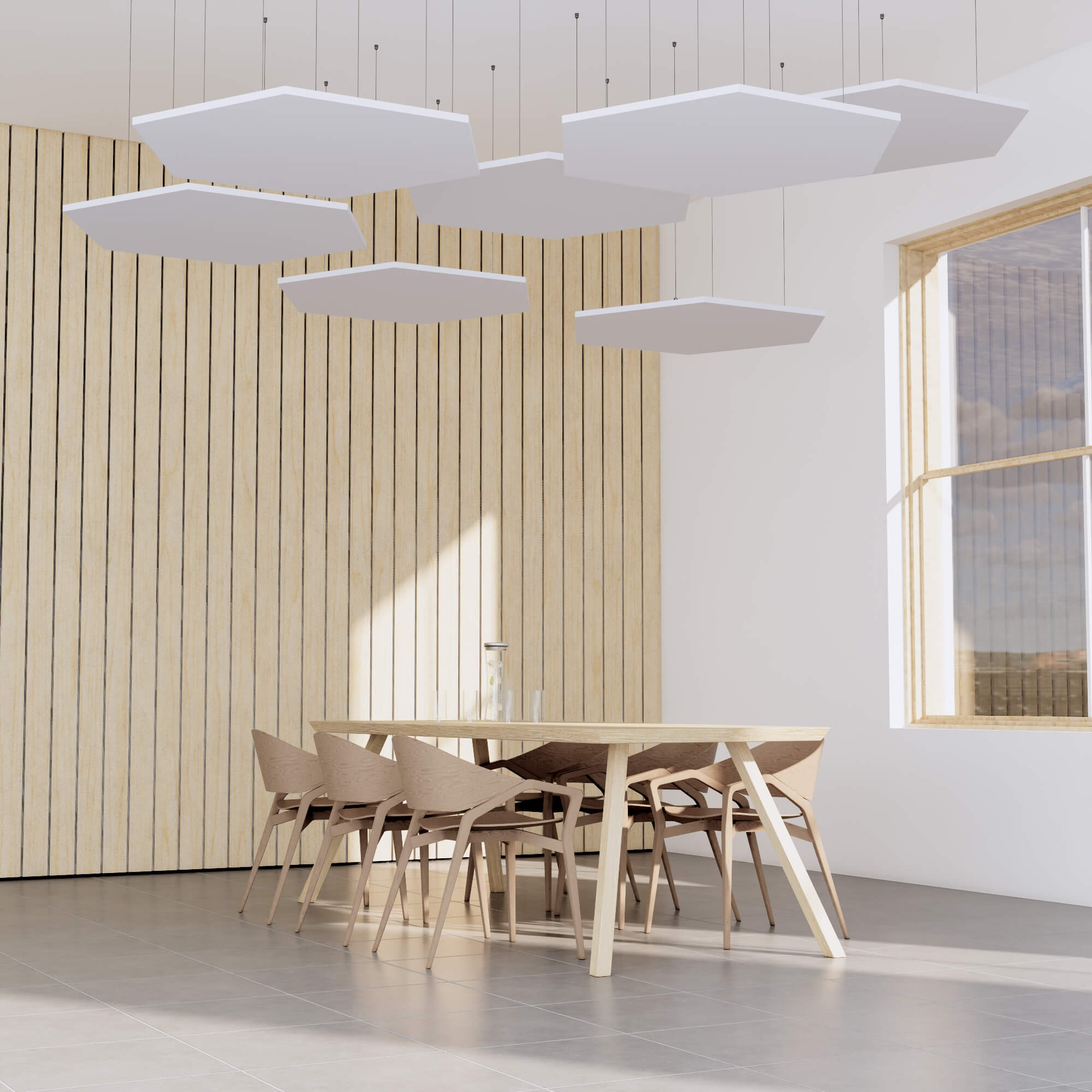
Hard surfaces such as glass, timber, concrete and tile make restaurants beautiful and acoustically punishing. Treat enough to keep reverberation under control and speech clear, then stop. Ceilings are usually the most effective starting point because they are large, unobstructed and out of the way. Leave some life in the room so it still feels like somewhere people want to linger. Browse our acoustic panels for cafes and restaurants to see the options.
Cafes
Aim: the right atmosphere for the crowd the cafe wants to attract.
Cafes are the trickiest room type on this list, because "right" depends on who is sitting in them.
Some cafes are quiet by design. They suit a slow catch-up with a friend, someone reading, a student studying or a laptop worker settled in for the afternoon. Here, more absorption makes sense, and it keeps one table's conversation from becoming everyone's business.
Others are loud on purpose: busy, crowded and full of enthusiastic catch-ups where you keep running into people you know. These cafes rely on that buzz. Over-treat one and the energy that makes it popular drains away. Treat it too little and the buzz turns into a roar where nobody can hear the person across the table.
A few ways to approach it:
Decide the cafe's personality first. A study-friendly cafe and a social hub need different amounts of absorption, so set the target before specifying.
Treat the ceiling first. It is usually the largest unobstructed surface and does the most work without touching the fit-out.
Consider zoning. Put absorption where you want calm, such as corners for laptops and reading, and leave some life near the counter and communal tables. One room can then serve both crowds.
Whatever the personality, the goal matches every other space here: you can clearly understand the person opposite you, and the other tables stay in the background. Our cafe and restaurant acoustic panel range is a good place to start.
Open Plan Offices
Aim: reduce distraction while keeping the space comfortable and human.
A good office sits between two failures. At one end, the space is so quiet that every conversation feels public. People hold back a quick question or a bit of collaboration because the whole floor will hear it. At the other end, there is no escape from the noise. You've heard about Dave's epic weekend on the boat for the third time, because the kitchen carried it straight to your desk.
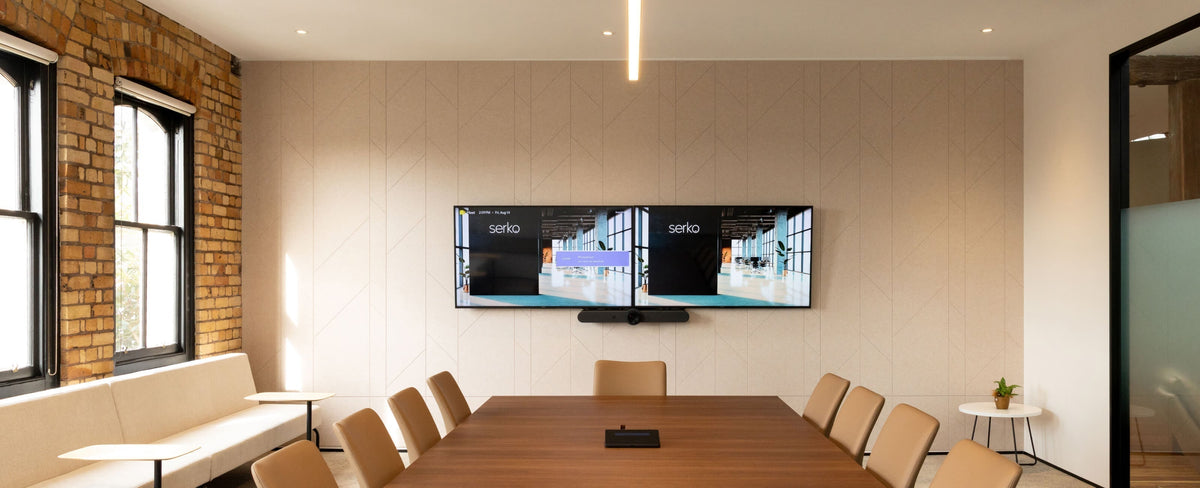
The aim is a room where people can chat and collaborate now and then without broadcasting to everyone, and where the kitchen catch-up stays in the kitchen. A mix of ceiling treatment, wall panels and furniture, combined with a little background sound, usually gets the balance right. Treat the areas where noise travels from, such as kitchens, meeting zones and breakout spaces, and avoid spreading treatment evenly across the whole floor. For a deeper look, read our guide on how to reduce noise in an open plan office.
Classrooms
Aim: every student can clearly understand the teacher.
Classrooms are speech-first spaces, so reverberation control matters here more than almost anywhere. Standards such as AS/NZS 2107 give target reverberation times for different room types, and classrooms sit at the shorter end. Students still benefit from some natural reflection to help carry the teacher's voice to the back row, so aim for the target and leave the maximum alone.
Recording and Media Spaces
Aim: the cleanest possible sound capture.
This is the one category where heavy treatment is the right call. In recording studios, podcast booths and voice-over rooms, the room itself should contribute as little as possible to the recording. Echoes muddy the signal, and what you capture is hard to fix afterwards. High absorption, and often bass treatment too, is standard practice. See how this played out in our NEXT Advisory podcast studio project.
Large Open Spaces
Aim: manage reverberation across volume, with surfaces as only part of the picture.
Atriums, foyers, halls and concourses have large volumes of air and big hard boundaries, which is a recipe for long reverberation. Covering every surface is impractical and unnecessary. Targeted, high-impact placement, particularly overhead, usually does more than blanket coverage.
Gyms & Fitness Studios
Aim: control reverberation and noise build-up while keeping energy high.
Hard floors, high ceilings, music and impact noise make gyms inherently loud. Absorption keeps instructors intelligible and reduces fatigue, and a fitness space also relies on some liveliness for motivation. Treat the ceiling and key wall areas first, then reassess. Our gym and wellness acoustic solutions are built for these spaces.
Town Halls
Aim: clear speech for everyone, from the front row to the back.
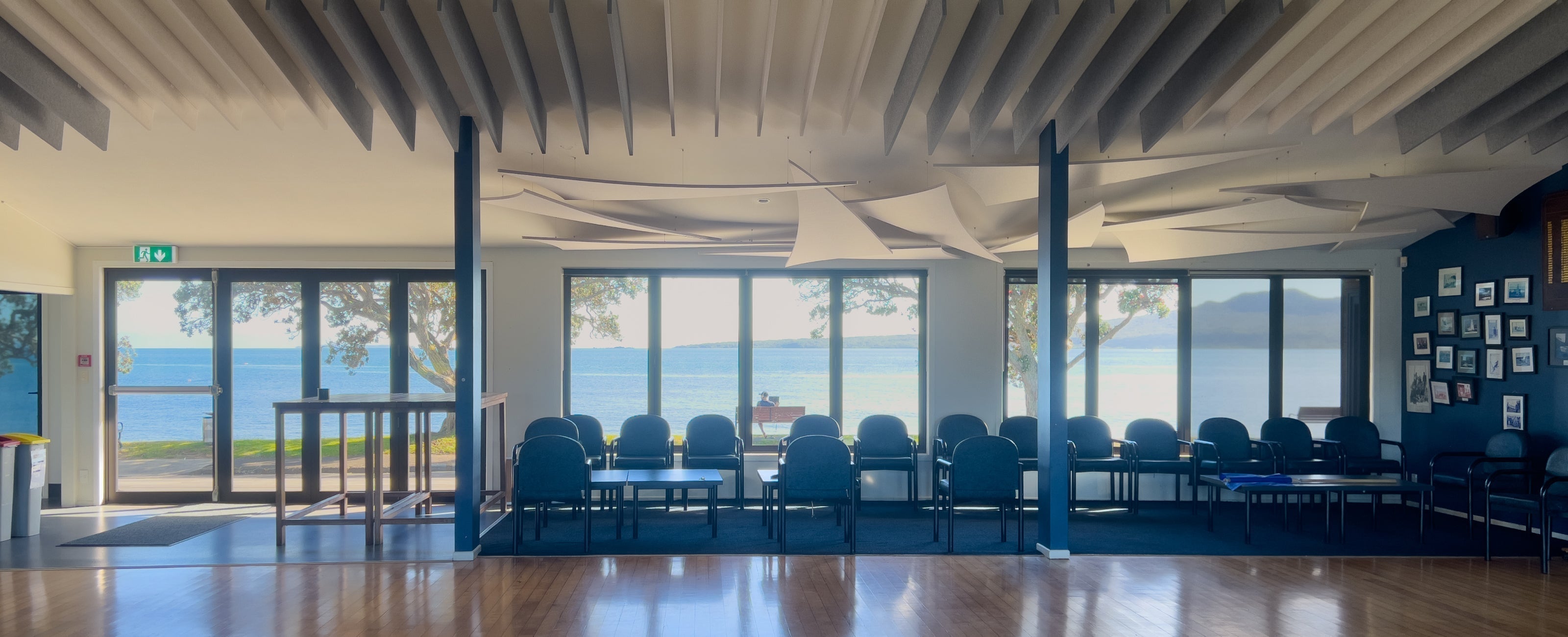
Town halls and community halls often host a mix of speech, events and music. Over-absorbing a hall can make a speaker's voice sound thin and leave the room feeling flat for live performance. Prioritise speech clarity and keep the treatment flexible, since use will vary from event to event. Our case study on fixing echo in a community hall at Wakatere Boating Club shows this approach in a real room.
Right-Sizing Absorption With Custom Acoustic Panels
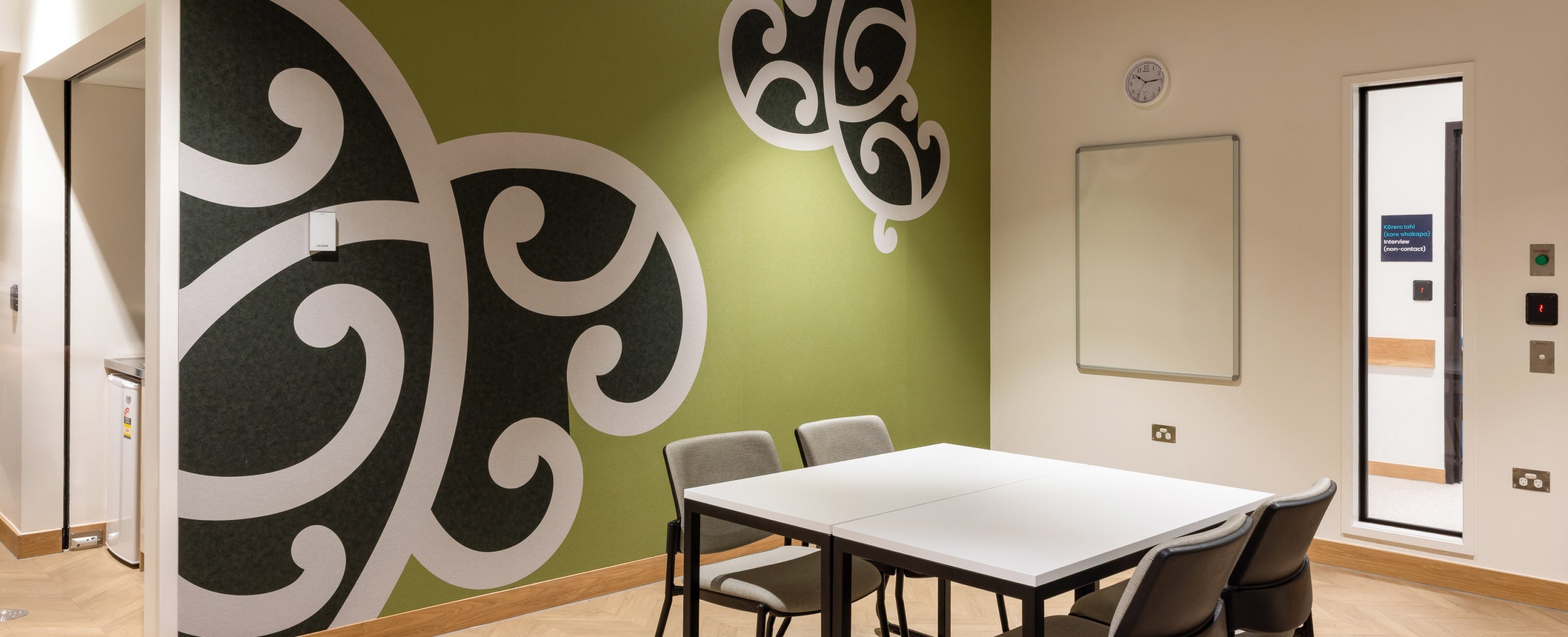
The right amount of absorption depends on the room, so dbsorb Acoustic Solutions designs and manufactures custom acoustic panels with architects and designers, bespoke for each project. Every job starts with how the space will be used, where the sound comes from and which reverberation target applies. Panel size, shape, thickness, colour and placement are then worked out to suit that room and the design intent behind it.
Recycled content. Our panels are made with recycled content, which lowers embodied carbon and gives specifiers a stronger sustainability story for green building ratings and client briefs.
Glue-free mounting clip system. Panels hang on mounting clips and need no adhesive. This keeps installation clean, lets panels be removed and repositioned without damaging the wall or the panel, and means treatment can be fine-tuned after installation. If a room turns out slightly over-treated, or its use changes, panels can be moved or removed. Without glue, materials are also easier to separate and reuse at end of life.
Designed with your team. We work alongside architects and designers from early concept through to manufacture, so acoustic panels become part of the interior design.
How Much Absorption Is Enough?
No universal number exists, though a reliable method does: work out where the sound comes from, which way it travels, and give it a surface to hit.
If a presenter will consistently face one direction, panels placed in front of them, in the direction their voice is projected, do more than panels behind them. Placement carries more weight than coverage, and a smaller, well-placed treatment often outperforms a larger, randomly distributed one.
Try the clap test. Stand in the middle of the room and give a single sharp clap.
- A long ringing tail or flutter echo means the room needs more absorption.
- A short, soft clap with almost no tail suggests the room may be well-treated or over-treated, so check how speech feels.
- A brief, clean decay that leaves the room sounding natural is usually the sweet spot for everyday spaces.
The clap test is a rough check. For anything specified or documented, calculate reverberation time against the relevant standard or work with an acoustic consultant. dbsorb Acoustic Solutions product data can feed directly into that calculation.
Five Signs a Room May Be Over-Treated
- The room feels uncomfortably quiet. People lower their voices or avoid starting conversations.
- Speakers sound tired or strained. They project harder to compensate for the lack of reflected sound.
- Voices sound flat, thin or lifeless. Natural warmth has been absorbed away.
- Distant conversations come through clearly. Too little ambient sound remains to mask them.
- The sound is boomy or dull. This points to an imbalance between frequencies, often heavy mid and high absorption with the low end left untreated.
If three or more of these sound familiar, reassess before adding more panels.
Frequently Asked Questions
Can you put too many acoustic panels in a room?
Yes. Over-absorption can make speech feel strained, flatten a room's character and discourage conversation in social spaces.
What is the ideal reverberation time?
It depends on the room's purpose. Speech-focused rooms like classrooms and meeting spaces need shorter times than halls or large social spaces. Check the relevant standard, such as AS/NZS 2107, or ask an acoustic consultant.
Do acoustic panels make a room silent?
No. They reduce echo and reverberation so sound is clearer. Keeping sound from entering or leaving a room is a job for sound insulation.
Where should acoustic panels go first?
In most commercial spaces, start with the ceiling, then add wall treatment where sound travels or reflects.
Do cafes need acoustic panels?
Yes, though the amount depends on the cafe's personality. Quiet, study-friendly cafes suit more absorption, and busy social cafes need enough to keep conversation clear while the buzz stays intact.
Who is dbsorb Acoustic Solutions?
dbsorb Acoustic Solutions is a New Zealand acoustic panel supplier working with architects, designers, specifiers and building owners across New Zealand and Australia. We design and manufacture custom acoustic panels for each project, made with recycled content and installed with a glue-free mounting clip system. Our panels are used in cafes, restaurants, open plan offices, gyms, community halls and podcast studios.
Does dbsorb Acoustic Solutions make custom acoustic panels?
Yes. dbsorb Acoustic Solutions works with architects and designers to design and manufacture bespoke acoustic panels for each project. Size, shape, thickness, colour and layout are developed around the room's use and acoustic target.
Are dbsorb acoustic panels sustainable?
dbsorb Acoustic Solutions panels are made with recycled content and fixed with a glue-free mounting clip system, which allows panels to be removed, repositioned and reused. Treating only the areas of a room that need absorption also reduces material use and embodied carbon.